
The Methodology of al-Fārūq in Dealing with the Plague: An Analytical Study
Article Sidebar
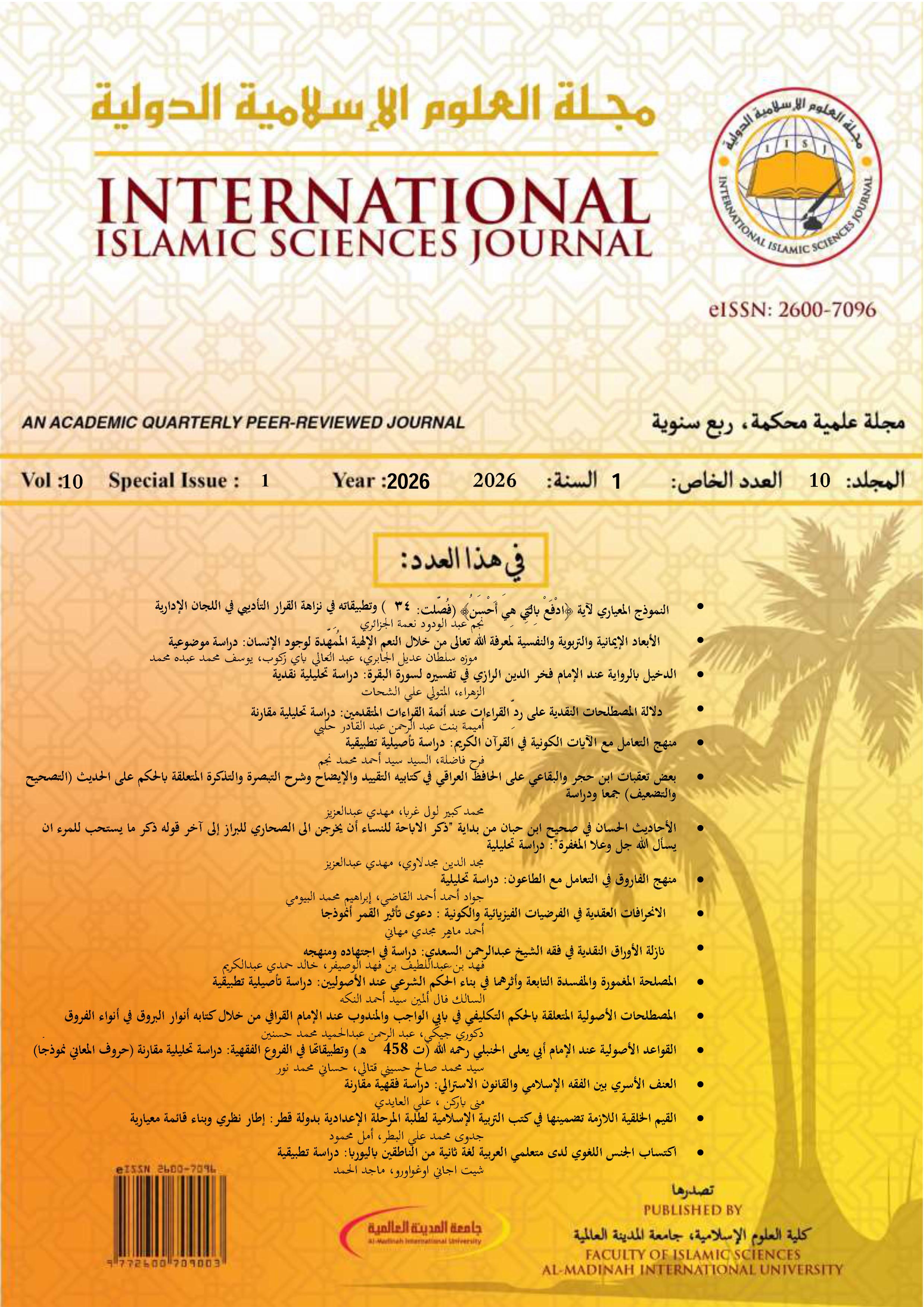
Main Article Content
Abstract
This study examines the methodology adopted by the Companions (may Allah be pleased with them) in dealing with the Plague of ʿAmwās, one of the most significant crises faced by the early Islamic state during the era of the Rightly Guided Caliphs. The study aims to highlight the legal foundations and methodological principles that guided the Companions in managing this public health crisis through an analysis of their practical responses in light of Islamic texts and the objectives of Islamic law (Maqāṣid al-Sharīʿah). The research employs an inductive approach to collect the relevant textual and historical reports, along with an analytical approach to examine the Companions’ decisions and derive the governing principles underlying their conduct. The study concludes that the Companions adopted a balanced methodology that combined reliance upon Allah with taking appropriate practical measures, adherence to the Prophetic guidance on preventing the spread of epidemics, consideration of the public interest, preservation of human life, and consultation (shūrā) in major decisions. This methodology represents a comprehensive juristic model that remains relevant for addressing contemporary public health crises.
Article Details

This work is licensed under a Creative Commons Attribution 4.0 International License.