
The Minimum and Maximum Limits of Taʿzīr (Punishment): A Jurisprudential and Judicial Study in Comparison with the Judicial Regulations of the Kingdom of Saudi Arabia
Article Sidebar
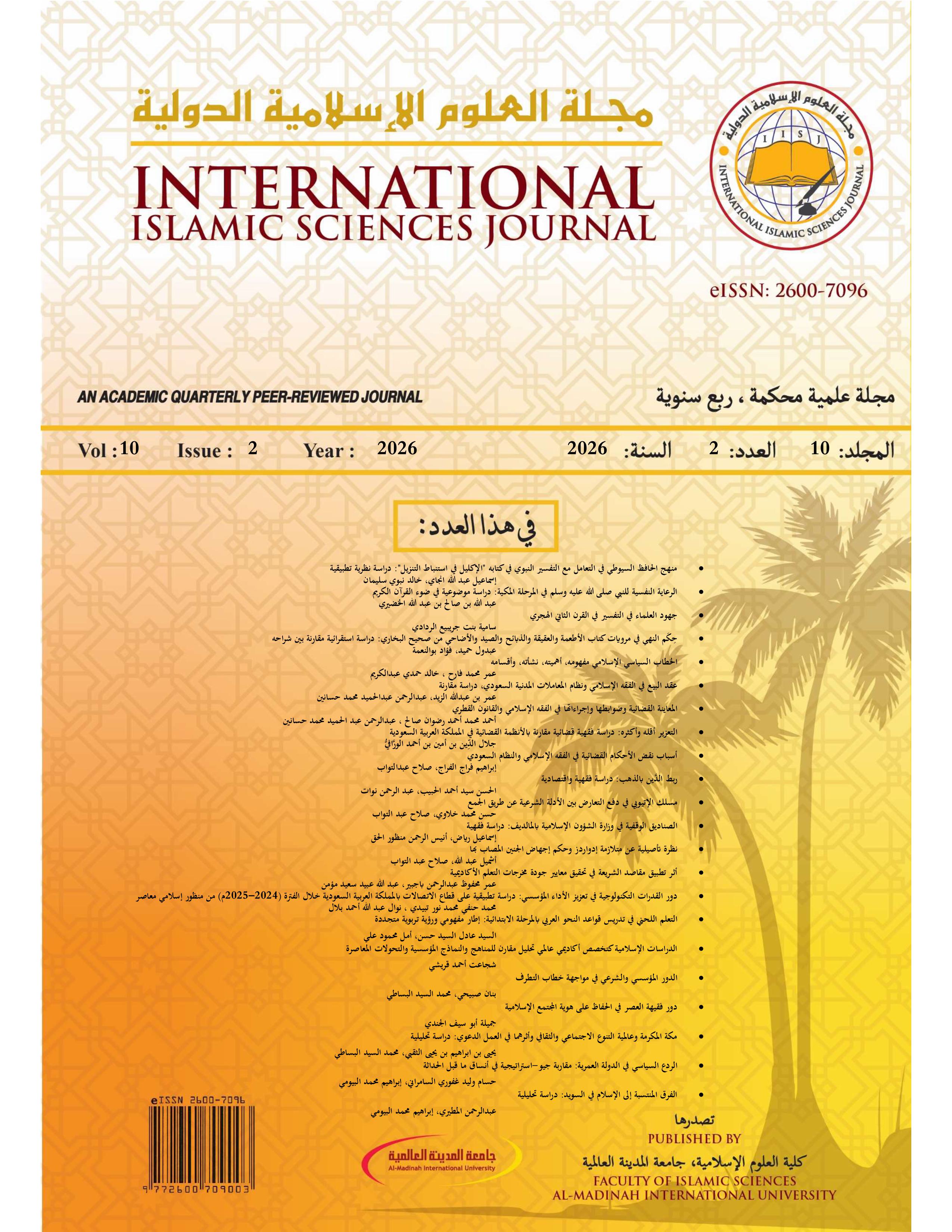
Main Article Content
Abstract
This study aimed to examine the extent of discretionary punishment (taʿzīr) in terms of its minimum and maximum limits, to compile and analyze the opinions of jurists on this issue, and to compare them with the judicial regulations applied in the Kingdom of Saudi Arabia, given the importance of the topic in both jurisprudential and judicial contexts. The study adopted the descriptive, analytical, and inductive approaches by tracing and analyzing relevant juristic texts, scholarly opinions, and judicial regulations. The study concluded that, according to the preponderant view, there is no fixed minimum or maximum limit for taʿzīr; rather, its determination is left to the discretion of the judge in accordance with the rulings and objectives of Islamic law. Taʿzīr must be proportionate to the offense committed, free from injustice or arbitrariness, and measured according to the standards of the Sharīʿah, since discretionary punishments were legislated to prevent violations against the five essential necessities that every individual is required to preserve..
Article Details

This work is licensed under a Creative Commons Attribution 4.0 International License.