
Sources of the Reasons for the Revelation of the Qur’an from the Nine Books: “Ṣaḥīḥ al-Bukhārī” as a Model
Article Sidebar
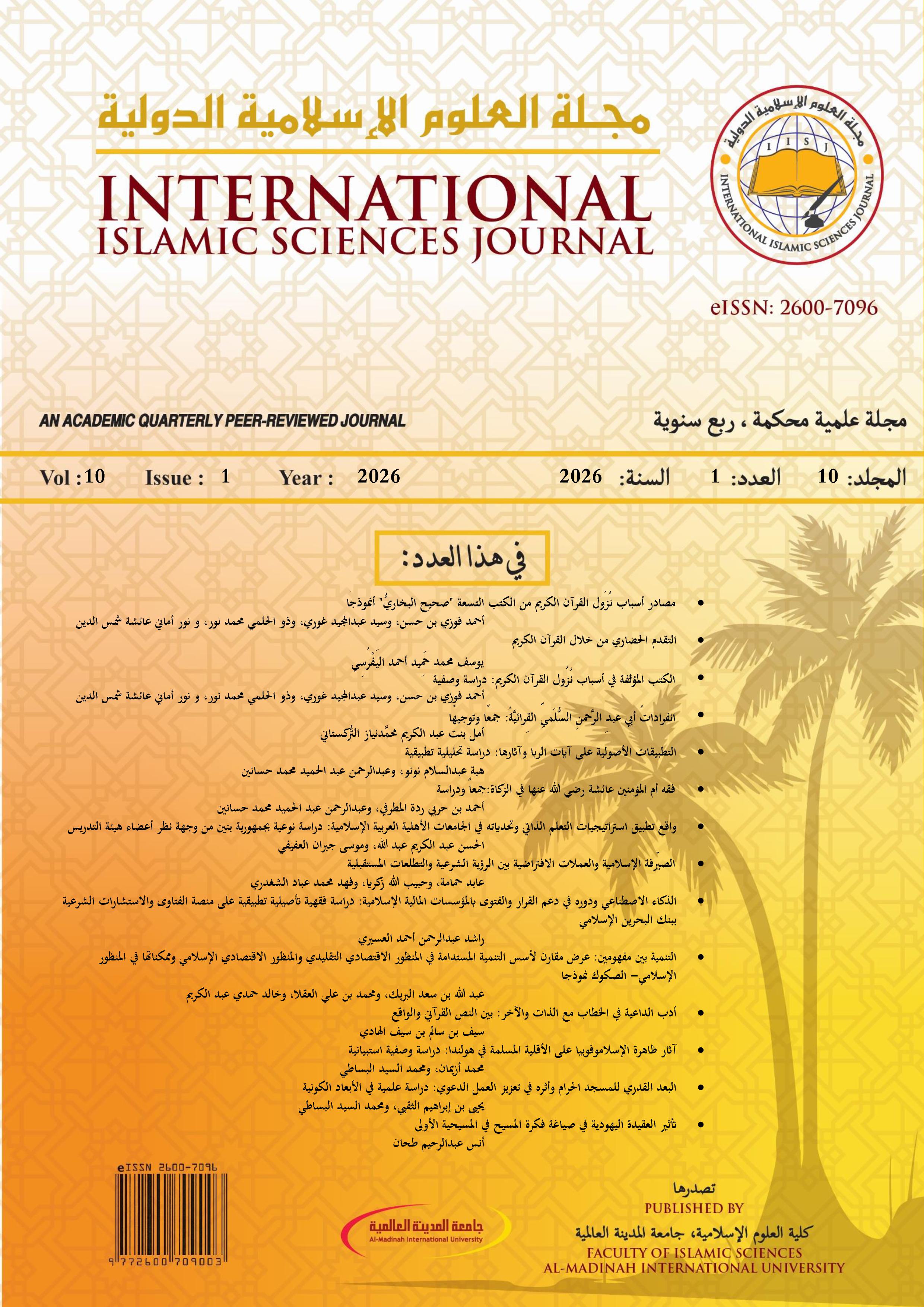
Main Article Content
Abstract
Among the foremost priorities for researchers and scholars in the field of Qur’anic studies is attaining a thorough grounding in the knowledge of the occasions of revelation (asbāb al-nuzūl) of the verses and sūrahs of the Noble Qur’an. Mastery of this discipline is indispensable, as it serves as a vital aid in achieving a sound and precise understanding of the Qur’an and its rulings. For this reason, exegetes devoted significant attention to the causes of revelation, expanding their research and discussion in specialized works dedicated to this subject. Scholars of ḥadīth were no less committed in serving this noble science; rather, their contribution was even more substantial and far-reaching. In compiling various categories of ḥadīth collections—such as the Ṣiḥāḥ (authentic collections), Sunan, and Masānīd—they incorporated numerous narrations pertaining to the occasions of revelation of Qur’anic verses and sūrahs. These works constitute some of the most important primary sources for the study of asbāb al-nuzūl, foremost among them Ṣaḥīḥ al-Bukhārī. Accordingly, this research paper seeks to introduce these foundational sources, with particular emphasis on examining the narrations related to the occasions of revelation found in Ṣaḥīḥ al-Bukhārī. The study is structured into three main sections. The first provides a concise discussion of the concept of the causes of revelation, the benefits of studying them, and the historical development of this discipline. The second is devoted to introducing the principal categories of ḥadīth literature in which the compilers included reports concerning the occasions of revelation. The third section presents an analytical study of the narrations in Ṣaḥīḥ al-Bukhārī pertaining to asbāb al-nuzūl. In preparing this paper, the researcher adopted both the inductive and descriptive methodologies. The inductive method was employed in surveying and compiling the relevant works authored in this field, while the descriptive method was utilized to provide a comprehensive and systematic scholarly presentation of these sources
Article Details

This work is licensed under a Creative Commons Attribution 4.0 International License.