
The Preacher’s Ethics in Discourse with the Self and the Other: Between the Qur’anic Text and Reality
Article Sidebar
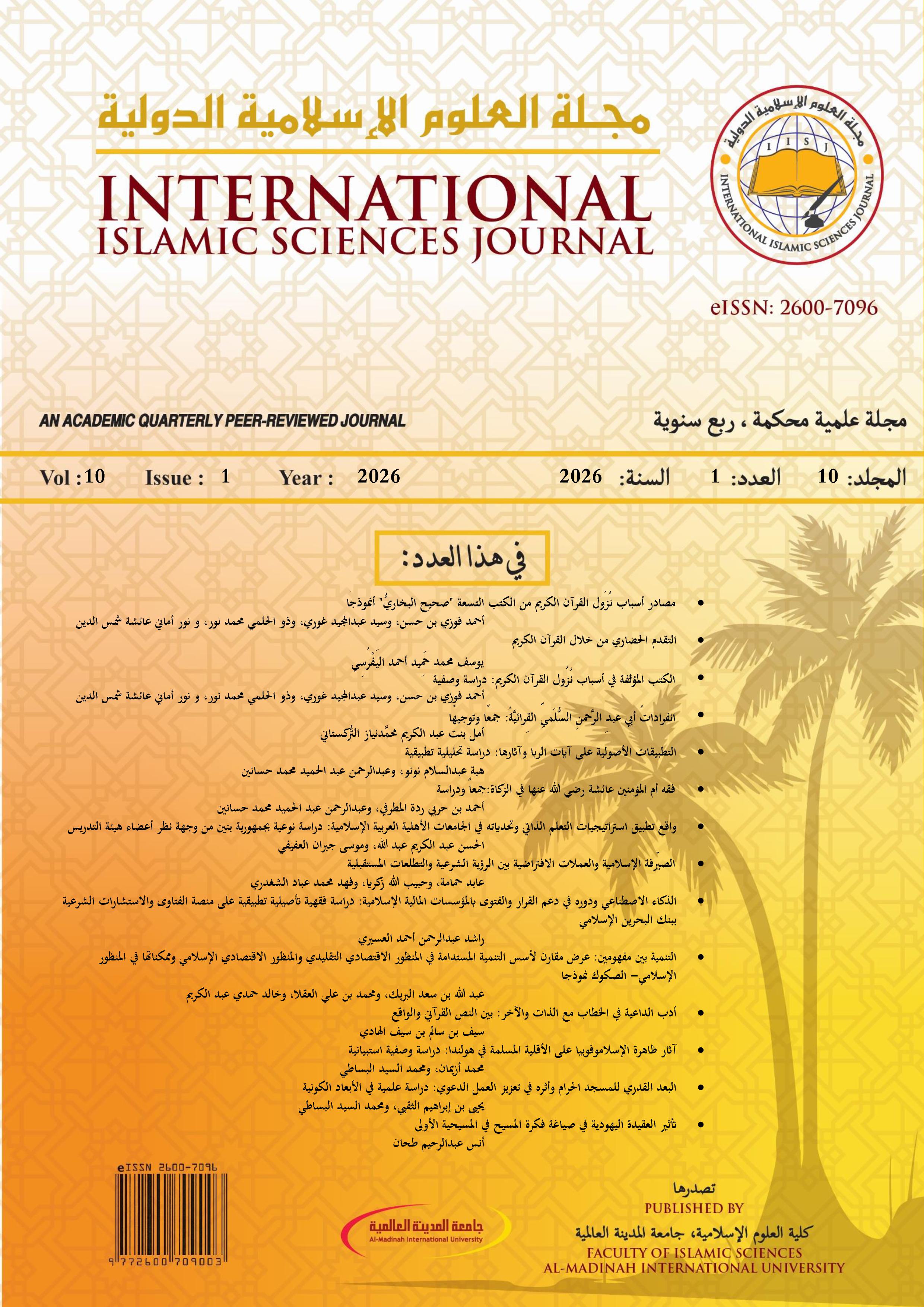
Main Article Content
Abstract
This study addresses the central question: How does the language used in religious preaching contribute to the emergence or intensification of extremism? Against the backdrop of rising religious radicalism, the research adopts a critical stance, arguing that preachers' direct discourse may unintentionally promote rigid interpretations that deviate from the objectives of Islamic law. Using a maqāṣid-based analytical approach, the paper compares Quranic models of prophetic speech with contemporary radical religious discourse. Findings show that misuse of terminology and detachment from textual intent are key factors in fueling extremism. The study highlights the preacher’s role in shaping religious perception and proposes an alternative discourse rooted in clarity, gradualism, and mercy.
Article Details

This work is licensed under a Creative Commons Attribution 4.0 International License.